
If you’ve landed here, there’s a good chance your faith feels shaky, or maybe it’s already in pieces on the ground. You might be going through a season of deconstruction, asking big questions you didn’t even know were allowed. Maybe the beliefs that once felt comforting now feel like they’re suffocating you.
I need to start with a moment of brutal honesty…
Your faith probably won’t survive this season in its current form, and that’s OK.
It’s perfectly normal for our understanding of ourselves, others, and the Divine to morph and change with us. And when that happens, our beliefs usually shift with us, even when we don’t want them to. It’s a sign that something deeper is stirring.
If this process feels terrifying, disorienting, or lonely, please know that you are fully capable of navigating this wilderness of deconstruction.
There’s no formula to ensure that your faith comes out of this season untouched. And honestly, I don’t want that for you. The questions you’re asking are good. They come from a deep spiritual longing, a hunger for something more honest, more just, more whole.
If you’re asking “Will my faith survive?” I am sorry-I can’t promise you that it will.
What I can do is offer five tips to help you survive this season, and maybe even find pieces of your faith that are worth carrying into the next one.
I. Trust That You Will Find a Way Through This
There will be days when it feels like your entire identity is unraveling. When you wonder if you’ve gone too far. If there’s anything left. If you’ll ever feel solid again.
That’s part of the journey. It doesn’t mean you’ve done something wrong. It means your roots are reaching for deeper soil.
You are not the first person to ask hard questions about God, faith, or church. You won’t be the last.
Even when it feels like you’re being swallowed whole, you are still here. You’re still seeking. Still breathing. Still worthy of love.
You don’t have to know where you will land to keep takinig baby steps forward.

II. Find Safe People Who Don’t Benefit From You Staying Stuck
When we start to question deeply held beliefs, it can be hard to know who to trust. Some people will tell you to stop asking. To get back in line. To pray it away.
But those who truly care about your growth will figure out how to deal with their own discomfort, rather than asking you to stop questioning.
Seek out people who don’t have a vested interest in keeping you attached to harmful systems.
And remember, it’s okay to set boundaries with people who can’t walk with you in this season. You don’t owe anyone access to your deconstruction process. Coaches, therapists, and spiritual directors outside the tradition you’re examining can be powerful allies. Look for folks who are trauma-informed and supportive of faith transitions.
Always, always, ALWAYS vet professionals well.
Building a big social media following, publishing books, and having a few initials behind your name do not mean a therapist, coach, or mentor is worthy of your trust.
Make sure they have extensive, reputable training in the service they’re offering. Look up the programs and the university they trained at.
Ask for references, review contracts/client agreements closely, and never be afraid to ask more questions.
III. Loosen Your Grip on Certainty
Certainty may have felt like a spiritual virtue in your old faith community. You might have been taught that doubt was dangerous, that curiosity was disobedience.
But what if wonder is sacred?
What if questions are a sign of spiritual maturity, not weakness?
Letting go of certainty doesn’t mean you don’t believe in anything. It means you’re making room for complexity, nuance, and a Creator of the Universe who is bigger than doctrine and dogma.
There’s holiness in the mystery and a connection available in the unknown. If you’ve been taught that certainty equals safety, not having it can be absolutely terrifying.

IV. Notice When You Feel Most Alive
As you move through this season, you may notice that some activities create a spark of joy, bring a deep sense of peace, or help you rest easy. A song. A breath prayer. A walk in the woods. Lighting a candle. Crying with a friend.
Sometimes, the most mundane moment will literally take your breath away in this season of raw emotions.
All of these moments matter just as much as ceremonies in a modern sanctuary. They are signs that your spiritual life is taking on new shapes, sounds, and experiences. As you explore new stuff, keep in mind you don’t have to throw everything away. You can if you want to, but you’re also allowed to keep what still feels nourishing and let the rest go.
This is a great time to start a journal to jot down the things that make you feel grounded and connected. It helps to have pages to look back on during the hardest times. Your notes may expose seeds of what faith looks like in the next season.
V. Hold Space for Grieving-It’s Probably Present Already
One thing that catches a lot of my clients off guard is the overwhelming amount of grief that most experience. You may not realize how many emotions are flowing through you because grief can show up as anger, exhaustion, hyperactivity, anxiety, and even feeling super productive!
Everyone grieves differently, and each season of grief can look very different. You might be mourning the loss of a version of God who once felt safe with tears. Or angry that a church that once felt like home is looking at you with suspicion. Or even anxiously seeking a new community to replace the one you desperately miss.
That grief is real. It’s valid. And it deserves to take up as much space as needed.
Be careful not to rush to justify, explain, or rebuild it all. Moving too fast can squeeze out room to sit with your grief. (Honestly, that’s a big part of why rushing to the next thing is so attractive when we are hurting-It feels like a good way to make the pain stop.)
Keep in mind, you don’t have to “land” anywhere right now. It’s good to let yourself be tender and feel what’s coming up for you. Find a rage room or scream in the woods if it feels good. Curl up with Netflix and Ben & Jerry’s.
Let yourself fall apart, as many times as you need to. That, too, is holy work.

You May Not Keep the Faith You Once Had, But This Isn’t The End
Faith that survives change is rarely the same as it was before. Just remember, you can also find goodness in what you are creating. You may find yourself drawing from new traditions or revisiting old stories with new eyes. You may discover that what you’re building is more authentic, more compassionate, more aligned with your values than anything you had before.
Or you may step away from formal faith altogether, but the key is that you get to choose your path forward.
Whatever happens next, you are still loved. Still whole. Still held by something bigger than your doubts and fears. This season is not the end of you. If you’re holding the pieces of something that used to feel sacred, wondering what to keep and what to let go, keep going. Trust that you can make t through this.
Even if everyone else abandons you…You have your own back. You are your own support, and you will make it through the hardest parts.
Ready for the Next Step?
If you’re untangling old beliefs and wondering what comes next, the Sacred Threads workbook is a gentle, supportive place to begin.
It’s packed with reflection prompts, practices, and encouragement to help you move forward—one step at a time.
Not Sure Where to Start? Grab This Free Workbook!
Sacred Threads isn’t about becoming someone new.

It’s about remembering who you’ve always been.
You don’t need to push harder to heal.
You need room to breathe, reflect, and feel what’s true for you now.
Sacred Threads offers:
-
Simple, grounding practices to help you reconnect with your body and intuition
-
Journaling prompts that lead to insight, not overwhelm
-
A gentle rhythm of untangling and reweaving, on your own terms
Each section includes a simple practice, reflection prompts, and a gentle next step to help you move forward with clarity and hope.

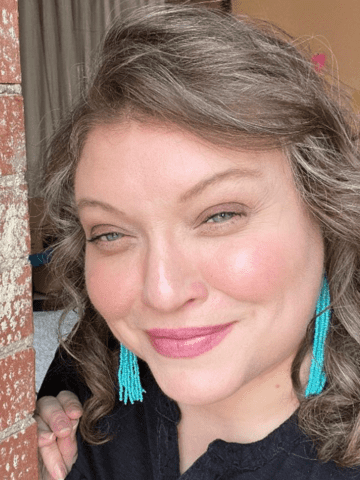
Angela Herrington is a spiritual coach and seminary-trained online pastor who has spent more than a decade helping people break free from toxic religious culture. She is the host of The Deconstructing Faith Summit, a Lark’s Song Certified Life Coach, a dynamic conference speaker, and the author of Deconstructing Your Faith without Losing Yourself. Her work has been featured in The New Republic, Religion News Service, Hope for Women magazine, and Authority Magazine.
She’s a firstborn, Enneagram 8, Gen Xer who loves to question everything. She holds a BA from Indiana Wesleyan and a Master in Leadership from Wesley Seminary. Her graduate research project focused on leadership development and opportunities for Gen X women in the US church.
Angela and her unique online ministry are featured in Lyz Lenz’s 2019 book God Land: Story of Faith, Loss, and Renewal in Middle America. She has published articles in Hope for Women and HOPE is Now magazines. She has been featured in The New Republic, Publisher’s Today, and Religion News Service.
Her first book, Deconstruct Your Faith Without Losing Yourself (Eerdmans February, 2024), shares her decade of experience as a coach in Christian spaces, personal stories, a hefty dose of compassion, and her trademark Gen X humor.
Her second book, Embracing the Old Witch in the Woods: Liberating Feminine Wisdom from Christian Patriarchy (Broadleaf, October 2025), is a road map for readers ready to challenge limiting beliefs, confront systemic injustices, and reclaim their inherent worth and wisdom. It helps readers reclaim feminine wisdom in order to liberate ourselves, our communities, and our souls, gaining strength and resilience through our connection to ourselves and to each other.
Angela is also a wife, a mom to 5, and a proud resident of Indiana, with her family when they’re not traveling the US in their RV.