
For a long time, I didn’t know what I believed—I just knew things were shifting.
I didn’t believe women needed to be silent.
I didn’t believe obedience was the same as love.
I didn’t believe faith had to be rooted in shame or fear.
I didn’t believe God was cruel enough to value some lives over others.
But it took me a while to figure out what I did believe, and if I’m benig 100% honest, I will probably be figuring this out for the rest of my life.
Leaving toxic theology behind created space, but at first that space felt hollow. I had spent so long trying to survive systems that told me what to think that I hadn’t been given many tools for finding my own voice. I wasn’t even sure I was allowed to. But I was hungry for something true—something loving and liberating that could actually hold me.
Over time, I began to name what matters to me. Not to create a new box or write a tidy doctrine, but to give myself a place to land. A place to stand.
These are my core beliefs right now. They may evolve. They may deepen. There are likely problamatic beliefs I haven’t uncovered yet.

My Core Beliefs (Today)
These are the values I keep returning to. They show up in my writing, coaching, relationships, and spiritual practice. Maybe some of them will resonate with you, too.
-
Every person is inherently sacred. No one has to earn their worth. You matter because you exist, not because of what you earn or contribute.
-
Women’s bodies and voices are sacred. Full stop. We don’t need permission to lead, speak, or be.
-
LGBTQIA+ people are beloved. Not just tolerated—celebrated, fully worthy of love, leadership, and spiritual belonging.
- Christian Nationalism is an atrocious misuse of power. Pairing Biblical promises of God’s blessing with white supremacy, xenophobia, homophobia, and gender bias is immoral and unjust.
- Racism exists, and equity is a Holy mandate. Ignoring it only preserves it and continues to harm people not centered in white supremacist theology.
-
Caring for the Earth is a spiritual responsibility. Creation isn’t here for us to dominate. We’re here to live in an equitable relationship with nature.
- Colonization is the opposite of loving our neighbors. Because of our genocidal tendencies, we owe indigenous people around the world more reparations than we could ever repay.
-
Healthy boundaries are holy. Love does not require self-abandonment. Saying no is often the most faithful thing we can do.
-
Leadership requires accountability. Especially in faith communities. Power without accountability breeds harm.
-
Choice is sacred. We were created with autonomy on purpose. Making decisions about our own lives is a spiritual act.
- Ignorance is a choice for most of us. Well and average-resourced people have access to a plethora of reliable, factual, and well-researched information. Choosing to believe irrational conspiracy theories, hyperbole, and hateful rhetoric is wasting God’s gift of human intelligence and curiosity.
-
Jesus invites us toward liberation, not legalism. The rules aren’t the point. Love is.
-
Questions are sacred. Doubt is not a failure—it’s part of a growing, living faith.
-
Much of the Church is stifling spiritual growth. Squashing curiosity, diversity, and an intellectual pursuit of Biblical context creates an echo chamber and decreases our ability to move with the Spirit.
- Oppression never creates freedom. Liberation theology must take the place of oppressive, exclusionary religion that strives to protect the existing power structure.
If you have questions about where I stand on another topic or issue I haven’t addressed.
Reach out here.

Why Publicly Posting What I Believe, Matters
These beliefs shape every part of my life. They give me a filter for what I say yes to—and what I walk away from. They help me recognize when I’m slipping into old patterns rooted in fear or shame. They help me show up with integrity in my work and relationships.
They also help me keep healing. When old wounds flare up or I question my path, I can return to these values as anchors.
If you’ve ever felt unmoored in your faith, I hope this reminds you that it’s okay to rebuild—slowly, gently, and in your own way.
From Fear to Freedom: Naming What’s Yours
If you’re in the middle of deconstructing—or you’ve already walked away from harmful theology—you might know exactly what you don’t want. But naming what you do want can feel harder. Maybe you’ve been taught that believing differently makes you a heretic or a failure. Maybe the people around you just don’t get it.
Naming your values is an act of resistance. It’s also an act of healing.
It helps you live with more clarity, confidence, and connection—especially when your faith no longer fits inside the mold you were handed.

Public Declaration Is A Big Step Towards Living Aligned
It’s one thing to name your beliefs. It’s another to live them.
For me, living aligned means:
-
Walking away from communities that don’t value the full humanity of everyone.
-
Making space in my schedule for rest, not just productivity.
-
Refusing to abandon myself for the sake of belonging.
-
Listening deeply—to my body, to the land, to the people I love, to the Spirit.
Alignment also requires a willingness to change. Some of the beliefs I hold now would have shocked me a decade ago. That’s not weakness, it’s growth, and a sign of a healthy faith.
Keep Going
You don’t have to believe what others told you.
You don’t have to fit someone else’s mold.
You are free to build a faith that reflects your deepest truth.
Want more support on that journey?
Check out the on-demand workshops for gentle, empowering ways to keep growing at your own pace.
Hands at your back,
Angela

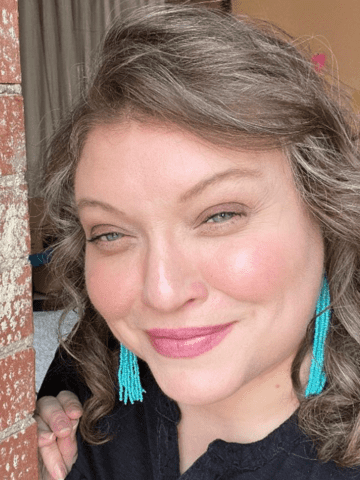
Angela Herrington is a spiritual coach and seminary-trained online pastor who has spent more than a decade helping people break free from toxic religious culture. She is the host of The Deconstructing Faith Summit, a Lark’s Song Certified Life Coach, a dynamic conference speaker, and the author of Deconstructing Your Faith without Losing Yourself. Her work has been featured in The New Republic, Religion News Service, Hope for Women magazine, and Authority Magazine.
She’s a firstborn, Enneagram 8, Gen Xer who loves to question everything. She holds a BA from Indiana Wesleyan and a Master in Leadership from Wesley Seminary. Her graduate research project focused on leadership development and opportunities for Gen X women in the US church.
Angela and her unique online ministry are featured in Lyz Lenz’s 2019 book God Land: Story of Faith, Loss, and Renewal in Middle America. She has published articles in Hope for Women and HOPE is Now magazines. She has been featured in The New Republic, Publisher’s Today, and Religion News Service.
Her first book, Deconstruct Your Faith Without Losing Yourself (Eerdmans February, 2024), shares her decade of experience as a coach in Christian spaces, personal stories, a hefty dose of compassion, and her trademark Gen X humor.
Her second book, Embracing the Old Witch in the Woods: Liberating Feminine Wisdom from Christian Patriarchy (Broadleaf, October 2025), is a road map for readers ready to challenge limiting beliefs, confront systemic injustices, and reclaim their inherent worth and wisdom. It helps readers reclaim feminine wisdom in order to liberate ourselves, our communities, and our souls, gaining strength and resilience through our connection to ourselves and to each other.
Angela is also a wife, a mom to 5, and a proud resident of Indiana, with her family when they’re not traveling the US in their RV.