
Who Are My Ancestors?
For a long time, I thought ancestors only lived in genealogy books, whispered memories at family reunions, or my memories of elders who had passed away. They were names in obituaries, faces in faded photos, and branches on a tree I didn’t always know how to climb.
But somewhere along my healing journey, that questionWho are my ancestors?—started to open up something much deeper. I realized it wasn’t just about biology. It was about belonging. About stories. About soul.
Whether you come from a family that kept close records or one where the past is covered in silence, you still come from somewhere. And more importantly, you’re still connected to someone. That’s what this post is about.
Expanding the Definition: Ancestors Beyond Biology
When most people ask, “Who are my ancestors?”, they’re thinking about bloodlines. Parents, grandparents, and those who came before. But the truth is, ancestry can show up in many forms:
-
Biological lineage: the people you’re genetically related to
-
Spiritual lineage: teachers, mentors, and soul-family who shaped your beliefs
-
Cultural or geographic roots: the land, traditions, and migrations that shaped your people
-
Chosen family: those who may not be blood but hold ancestral weight in your life
If you’re adopted, estranged from your family, or unsure of your heritage, you still have ancestors. Some you may never name, but you’ll feel them. Others may be chosen with intention—a way of saying, “This is the lineage I claim.”
None of us are left out or completely disconnected. Your ancestral identity includes all those who helped shape who you are.

Why Ancestral Identity Matters
When we ask who are my ancestors, we’re not just asking about the past. We’re asking about ourselves.
Knowing your ancestors—even in a spiritual or symbolic way—can help you:
-
Understand your emotional inheritance: patterns like overfunctioning, perfectionism, or scarcity often have roots in generational survival strategies
-
Reclaim what was lost: language, rituals, values, or traditions that colonialism, war, migration, or patriarchy erased
-
Feel less alone: when you know people came before you who endured, resisted, and loved in the face of hardship, you start to feel a sense of strength in your bones
-
Ground yourself spiritually: ancestry connects us to something older and deeper than any current system or trend
Even if you’re deconstructing your faith, healing from trauma, or redefining your identity, your ancestors can still be a place of grounding—not confinement.
Lineage Is Always Complicated, But You Can Handle It
Let’s be honest: not all ancestors are easy to honor.
Some of us come from colonizers, abusers, or people whose choices caused generational harm. Others come from ancestors who survived those systems and carried the weight in silence. And many of us carry both in our line.
The truth is: your ancestors were human. You don’t have to romanticize them or excuse what they did. You can hold space for both harm and resilience. You can grieve the pain and still find parts worth remembering. You can also release the pain carried by those that came before and shift your family’s trajectory towards healinig and flourishing.
When I think of my great-grandmother—who was orphaned in the 1918 Spanish flu epidemic—I feel the ache of loss that shaped her and likely shaped those who came after. I didn’t understand the weight of that story until I began learning about epigenetics and ancestral healing.
And while exploring these topics may be dismissed in some Evangeliical circles as “woo-woo,” there is extensive science on the impact of ancestral trauma and the benefits of connecting with our ancestors. Authors like Rabbi Tirzah Firestone and Clarissa Pinkola Estés have shown me how deeply connected we are to our ancestors, on both a cellular and soul level.

How to Begin Connecting
You don’t have to have all the answers to begin building a relationship with your ancestors. Start where you are. Try what feels safe.
Here are a few gentle ways to begin:
-
Light a candle and speak a name
Even if you don’t know who they were, say, “To the ones who came before me—I’m listening.” - Visit sacred places
Graves, former homes, churches, and other locations your ancestors walked can bring healing and connection. - Collect physical reminders
Rocks, sticks, leaves, soil, or other reminders of sacred spaces make it easier to connect later. -
Write a letter to your ancestors
Thank them. Ask questions. Tell them what you wish they’d known. -
Explore your family history
Ask an older relative for stories. Look through old photographs. Search census records or ancestry databases. -
Learn about your culture of origin
Try a traditional recipe, learn a few words of the language, or study the history of the places your family lived. (Be careful not to appropriate other cultures.) -
Create(or curate) art, music, or prayer in their honor
Express what you wish had been said. Make space for beauty, grief, and joy. Music(like these playlists) can be powerful
Remember, there’s no right or perfect way to do this. It’s not about performance. It’s about connection.
You’re Already Part of a Long Line of Strong People
The question “Who are my ancestors?” doesn’t always come with neat answers. But it’s a question worth sitting with. And not just for information—for transformation.
If you’re ready to keep exploring, here are a few ways to go deeper:
-
Download the free workbook Sacred Threads: Untangling the Old to Make Room for What’s True
-
Explore the Ancestors page for curated playlists and spiritual practices
-
Join our community and conversations in the Free Facebook Group
-
Browse my coaching or on-demand workshops for guided support
You are not lost. Even if you feel completely disconnected, you are surrounded by ancestors who love you.
And I’m so glad you’re here.
With hope & encouragement,
Angela
Not Sure Where to Start? Grab This Free Workbook!
Sacred Threads isn’t about becoming someone new.

It’s about remembering who you’ve always been.
You don’t need to push harder to heal.
You need room to breathe, reflect, and feel what’s true for you now.
Sacred Threads offers:
-
Simple, grounding practices to help you reconnect with your body and intuition
-
Journaling prompts that lead to insight, not overwhelm
-
A gentle rhythm of untangling and reweaving, on your own terms
Each section includes a simple practice, reflection prompts, and a gentle next step to help you move forward with clarity and hope.

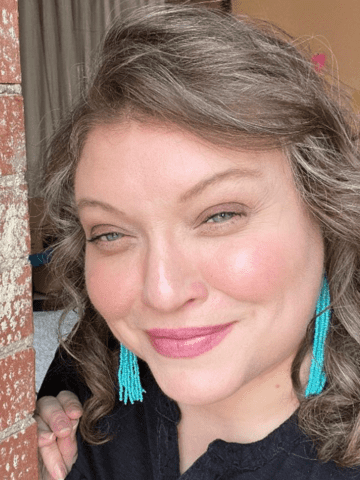
Angela Herrington is a spiritual coach and seminary-trained online pastor who has spent more than a decade helping people break free from toxic religious culture. She is the host of The Deconstructing Faith Summit, a Lark’s Song Certified Life Coach, a dynamic conference speaker, and the author of Deconstructing Your Faith without Losing Yourself. Her work has been featured in The New Republic, Religion News Service, Hope for Women magazine, and Authority Magazine.
She’s a firstborn, Enneagram 8, Gen Xer who loves to question everything. She holds a BA from Indiana Wesleyan and a Master in Leadership from Wesley Seminary. Her graduate research project focused on leadership development and opportunities for Gen X women in the US church.
Angela and her unique online ministry are featured in Lyz Lenz’s 2019 book God Land: Story of Faith, Loss, and Renewal in Middle America. She has published articles in Hope for Women and HOPE is Now magazines. She has been featured in The New Republic, Publisher’s Today, and Religion News Service.
Her first book, Deconstruct Your Faith Without Losing Yourself (Eerdmans February, 2024), shares her decade of experience as a coach in Christian spaces, personal stories, a hefty dose of compassion, and her trademark Gen X humor.
Her second book, Embracing the Old Witch in the Woods: Liberating Feminine Wisdom from Christian Patriarchy (Broadleaf, October 2025), is a road map for readers ready to challenge limiting beliefs, confront systemic injustices, and reclaim their inherent worth and wisdom. It helps readers reclaim feminine wisdom in order to liberate ourselves, our communities, and our souls, gaining strength and resilience through our connection to ourselves and to each other.
Angela is also a wife, a mom to 5, and a proud resident of Indiana, with her family when they’re not traveling the US in their RV.