
Faith deconstruction is the process of critically examining the beliefs you’ve inherited—especially those from religious systems—and deciding what to keep, change, or let go. It often starts when something no longer fits: a teaching, a tradition, or an assumption you were told was “the truth.” But instead of ignoring the dissonance, you choose to explore it.
This process can feel disorienting, lonely, and even terrifying—especially if your community sees questioning as betrayal. But it can also be profoundly liberating. When done with care, deconstruction isn’t about destroying your faith. It’s about finding your way back to what’s real.
Why Do People Deconstruct Their Faith?
Faith deconstruction often begins when people encounter:
- Spiritual harm or religious trauma
- Hypocrisy between what was taught and how people act
- Unanswered questions about things like hell, sexuality, gender, or the Bible
- Life changes like divorce, loss, abuse, or becoming a parent
- A desire for spiritual integrity, not just obedience
For some, it’s a slow process with questions building over the years. For others, it’s a sudden break after something painful. Either way, however you got here is valid. You’re allowed to ask questions. You’re allowed to seek truth that aligns with your values, your lived experience, and your deep inner knowing.
Deconstruction Does Not Have to Be the End of Faith
Some people stay within a faith tradition after deconstructing. Others leave entirely. Some call themselves Christian, others don’t. What matters is that the process helps you reclaim your spiritual agency.
Deconstruction is often misunderstood as:
- Rebellion
- Trendiness
- Lack of discipline
- Sin
- Rejecting tradition
- Choosing to away from God
But in reality, it often comes from a place of deep commitment. You care enough to examine what you believe, how it formed, and how it impacts others. That’s not faithlessness. That’s spiritual courage.

What Does Deconstruction Look Like?
The most annoying thing about deconstruction is also the most liberating thing-There’s no one right way to deconstruct. That may be frustrating at first, because it means there’s no clear A-Z path to get through it, but with time, that truth also releases the pressure of doing it right.
Some common experiences include:
- Questioning traditional teachings about hell, salvation, the Bible, or gender roles
- Letting go of toxic purity culture
- Leaving the church or redefining what church means
- Reclaiming your body, intuition, and emotional life as sacred
- Embracing interfaith learning, mysticism, or embodiment practices
- Discovering new ways to pray, connect, or practice rest
But again, there is no official all-inclusive list. You may go through waves of grief, anger, relief, and even joy. You may rebuild a new kind of faith, or you may choose a completely different path, but it’s up to you.
The One Thing I Know for Certain Is You’re Not Alone
Hundreds of thousands, maybe even millions of people are deconstructing their faith. They’re not just walking away from the bad stuff; they’re also walking toward something that feels more aligned, more honest, and more whole.
If you’re deconstructing, it can be scary, but just keep reminding yourself:
- Your questions are valid.
- Your story matters.
- You don’t owe anyone an explanation.
- You don’t have to do this alone.
This site is full of resources to support you, whether you’re just starting or years into the journey. There are blog posts, embodiment practices, playlists, workshops, and a powerful community of fellow travelers.
The best part is you can take what serves you well and ignore the rest.
Next Steps: Want More Support?
Visit AngelaJHerrington.com/faith-deconstruction to explore blog posts, workshops, and coaching resources created just for you.
Not Sure Where to Start? Grab This Free Workbook!
Sacred Threads isn’t about becoming someone new.

It’s about remembering who you’ve always been.
You don’t need to push harder to heal.
You need room to breathe, reflect, and feel what’s true for you now.
Sacred Threads offers:
-
Simple, grounding practices to help you reconnect with your body and intuition
-
Journaling prompts that lead to insight, not overwhelm
-
A gentle rhythm of untangling and reweaving, on your own terms
Each section includes a simple practice, reflection prompts, and a gentle next step to help you move forward with clarity and hope.

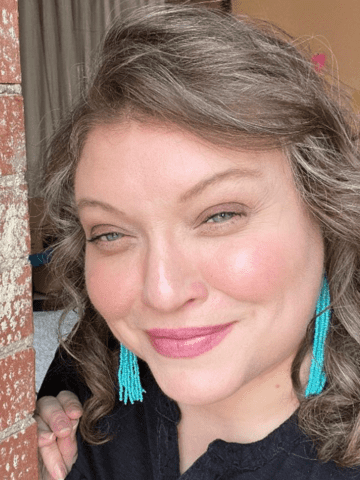
Angela Herrington is a spiritual coach and seminary-trained online pastor who has spent more than a decade helping people break free from toxic religious culture. She is the host of The Deconstructing Faith Summit, a Lark’s Song Certified Life Coach, a dynamic conference speaker, and the author of Deconstructing Your Faith without Losing Yourself. Her work has been featured in The New Republic, Religion News Service, Hope for Women magazine, and Authority Magazine.
She’s a firstborn, Enneagram 8, Gen Xer who loves to question everything. She holds a BA from Indiana Wesleyan and a Master in Leadership from Wesley Seminary. Her graduate research project focused on leadership development and opportunities for Gen X women in the US church.
Angela and her unique online ministry are featured in Lyz Lenz’s 2019 book God Land: Story of Faith, Loss, and Renewal in Middle America. She has published articles in Hope for Women and HOPE is Now magazines. She has been featured in The New Republic, Publisher’s Today, and Religion News Service.
Her first book, Deconstruct Your Faith Without Losing Yourself (Eerdmans February, 2024), shares her decade of experience as a coach in Christian spaces, personal stories, a hefty dose of compassion, and her trademark Gen X humor.
Her second book, Embracing the Old Witch in the Woods: Liberating Feminine Wisdom from Christian Patriarchy (Broadleaf, October 2025), is a road map for readers ready to challenge limiting beliefs, confront systemic injustices, and reclaim their inherent worth and wisdom. It helps readers reclaim feminine wisdom in order to liberate ourselves, our communities, and our souls, gaining strength and resilience through our connection to ourselves and to each other.
Angela is also a wife, a mom to 5, and a proud resident of Indiana, with her family when they’re not traveling the US in their RV.