
For much of my life, I thought “ancestor” was just a genealogy term. It meant dates, maiden names, and census records—something the oldest child in a line like mine would keep track of. I met all of my grandparents, and I even remember most of my great-grandparents. Our family often talked about lineage, but not about legacy. We didn’t talk about how their stories lived on in our bodies.
That changed when I started doing deeper spiritual and emotional healing work.
I realized that healing doesn’t begin and end with me. It runs through me. I carry not only my own wounds but the unspoken pain, silence, and survival strategies of those who came before.
That’s what ancestral healing is. It’s the practice of naming, honoring, and transforming the patterns that have been passed down—consciously or unconsciously—through generations. It’s a slow, sacred return to wholeness.
Why It Matters More Than You Think
In 1918, my great-grandmother was orphaned during the Spanish flu epidemic. That one loss shaped our family in quiet but powerful ways. The separation, grief, and instability from that moment trickled down across generations, even though no one talked about it. I didn’t understand how much it affected me until I began studying epigenetics and spiritual lineage.
Like many people raised in conservative Midwestern communities, I was taught to avoid anything that sounded too “woo-woo.” But when I found the work of Rabbi Tirzah Firestone and Clarissa Pinkola Estés, something clicked. These weren’t just ideas—they were remembrances. Their words gave language to the deep knowing I already carried.
I began to see how my body, my nervous system, and my belief systems were shaped by more than just my upbringing. They were shaped by the echoes of grief, fear, resilience, and longing passed down through generations.

So What Is Ancestral Healing, Really?
Ancestral healing is not about fixing the past—it’s about tending to the present so the future can be different. It’s about listening to the stories that live inside us and choosing which ones we want to carry forward.
It might look like:
-
Noticing a belief or fear that’s been in your family for decades, and gently questioning if it still belongs
-
Feeling grief or rage that doesn’t seem to “make sense,” and realizing it was never yours alone
-
Honoring an ancestor not because they were perfect, but because their story holds something important
You don’t need a family tree, a DNA test, or a perfectly preserved lineage to begin. Ancestral healing is available to anyone willing to listen—with love and curiosity—to what’s been left unsaid.
It’s Not Just About Your Bloodline or Genetic Connections
Some of your ancestors will share your blood. Others will share your values, your spirit, or your path. Ancestors can be:
-
Biological relatives
-
Chosen family who shaped you
-
Cultural or spiritual figures who speak to your soul
-
The unnamed ones whose survival made your life possible
And if your family history includes trauma, abuse, or colonization, it’s okay to feel hesitant. You don’t have to honor anyone who harmed you. Ancestral healing is not about forced forgiveness—it’s about reclaiming your relationship to your lineage on your own terms.

Why Now?
Many of us are waking up to the ways religious trauma, white supremacy, and patriarchy have distorted our stories. We’re noticing the patterns we don’t want to pass on.
Ancestral healing offers a way through. It invites us to:
-
Listen to what was lost, not just what was told
-
Grieve what was silenced
-
Reclaim the wisdom that still lives in our bones
-
Become the ancestor we needed
This isn’t fast work. It’s not about perfection or fixing the past. It’s about showing up with love in the present—so those who come after us have a little more space to breathe.
You’re Already Part of This Story
You don’t have to “earn” your place in your lineage. You’re already in it.
You’re already holding the thread.
And you get to choose how it continues.
If this post stirred something in you, or you’re curious about how to begin your own journey of healing what came before you, I want to invite you into deeper support.
➡️ Explore my on-demand workshops where we talk about spiritual healing, reclaiming feminine wisdom, and breaking intergenerational cycles with intention.
Or start with the free guide: Download the “Sacred Threads” workbook here for a gentle companion for exploring ancestral, spiritual, and emotional healing.
And always remember, no matter what your family history says:
You are not too much.
You are not too late.
You are exactly where the story shifts.
Learn More About Ancestral Healing
If this post resonates with you, you’re not alone. I’ve gathered resources, stories, and spiritual practices to help you begin (or deepen) this work.
Learn more about ancestral healing →
Not Sure Where to Start? Grab This Free Workbook!
Sacred Threads isn’t about becoming someone new.

It’s about remembering who you’ve always been.
You don’t need to push harder to heal.
You need room to breathe, reflect, and feel what’s true for you now.
Sacred Threads offers:
-
Simple, grounding practices to help you reconnect with your body and intuition
-
Journaling prompts that lead to insight, not overwhelm
-
A gentle rhythm of untangling and reweaving, on your own terms
Each section includes a simple practice, reflection prompts, and a gentle next step to help you move forward with clarity and hope.

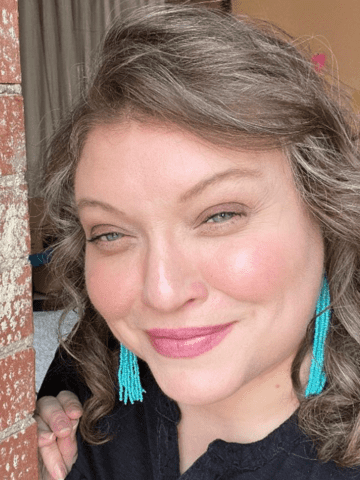
Angela Herrington is a spiritual coach and seminary-trained online pastor who has spent more than a decade helping people break free from toxic religious culture. She is the host of The Deconstructing Faith Summit, a Lark’s Song Certified Life Coach, a dynamic conference speaker, and the author of Deconstructing Your Faith without Losing Yourself. Her work has been featured in The New Republic, Religion News Service, Hope for Women magazine, and Authority Magazine.
She’s a firstborn, Enneagram 8, Gen Xer who loves to question everything. She holds a BA from Indiana Wesleyan and a Master in Leadership from Wesley Seminary. Her graduate research project focused on leadership development and opportunities for Gen X women in the US church.
Angela and her unique online ministry are featured in Lyz Lenz’s 2019 book God Land: Story of Faith, Loss, and Renewal in Middle America. She has published articles in Hope for Women and HOPE is Now magazines. She has been featured in The New Republic, Publisher’s Today, and Religion News Service.
Her first book, Deconstruct Your Faith Without Losing Yourself (Eerdmans February, 2024), shares her decade of experience as a coach in Christian spaces, personal stories, a hefty dose of compassion, and her trademark Gen X humor.
Her second book, Embracing the Old Witch in the Woods: Liberating Feminine Wisdom from Christian Patriarchy (Broadleaf, October 2025), is a road map for readers ready to challenge limiting beliefs, confront systemic injustices, and reclaim their inherent worth and wisdom. It helps readers reclaim feminine wisdom in order to liberate ourselves, our communities, and our souls, gaining strength and resilience through our connection to ourselves and to each other.
Angela is also a wife, a mom to 5, and a proud resident of Indiana, with her family when they’re not traveling the US in their RV.