
3. Use Breath as a Bridge
Your breath is always with you. Even when everything else feels disconnected, breath can be a steady companion.
Try this:
-
Inhale through your nose for 4 counts
-
Hold for 4
-
Exhale through your mouth for 6
-
Repeat 3–5 times
This pattern helps signal to your nervous system that you’re safe enough to rest. Use it during stressful moments or as part of a daily check-in.
4. Listen to Your Body’s Playlist
Music can be a powerful way to access feeling without forcing words. Sometimes your body knows what you need to feel before your mind catches up.
Explore one of the Embodiment playlists I’ve curated to support this kind of healing. Whether you need to cry, feel strong, or just be still—there’s a playlist to help you feel less alone in it.
5. Speak to Yourself with Compassion
So much of our disconnection comes from the inner critic—the voice that says, “Why can’t you just get over it?” or “You’re too sensitive.”
Try speaking to your body like you would a beloved friend or a younger version of yourself.
Say things like:
-
“It’s okay to feel this.”
-
“You don’t have to rush.”
-
“I’m here. I’m listening.”
The more often you do, the more your body will begin to believe it.
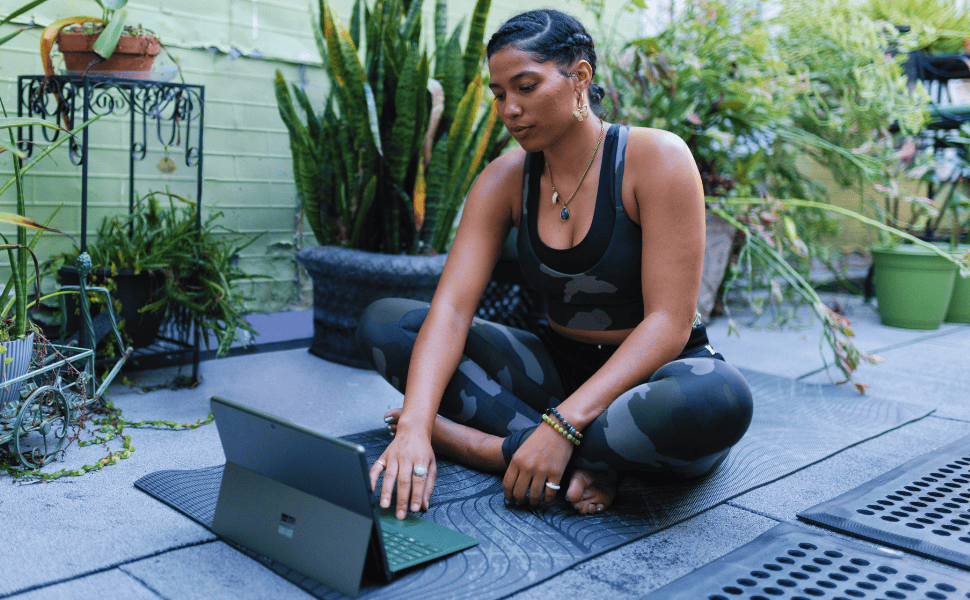
You don’t have to be fully healed to start connecting.
In fact, I don’t think it’s possible to heal without connecting with and healing our bodies. You’re allowed to show up exactly as you are, feeling disconnected, afraid, and uncertain. Just take one baby step toward wholeness and trust that you are safe with yourself. Your body is not your enemy or a mistake. She’s a sacred place of wisdom, resilience, and spirit.
Let these small practices remind you: You are already worthy of care.
Ready to go deeper?
Explore more somatic practices and spiritual tools on the Embodiment page—or dive into a related on-demand workshop designed to support you in healing at your own pace.

Donwload the freebie
Lorem ipsum dolor sit amet, consectetuer adipiscing elit. Donec odio. Quisque volutpat mattis eros. Lorem ipsum dolor sit amet, consectetuer adipiscing elit. Donec odio. Quisque volutpat mattis eros.

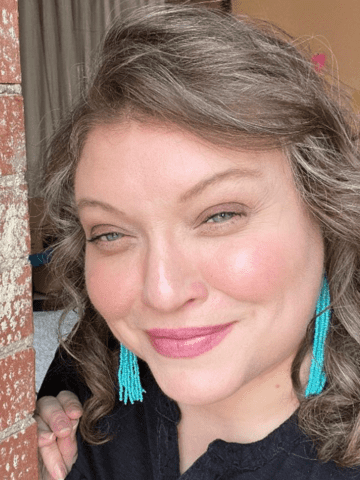
Angela Herrington is a spiritual coach and seminary-trained online pastor who has spent more than a decade helping people break free from toxic religious culture. She is the host of The Deconstructing Faith Summit, a Lark’s Song Certified Life Coach, a dynamic conference speaker, and the author of Deconstructing Your Faith without Losing Yourself. Her work has been featured in The New Republic, Religion News Service, Hope for Women magazine, and Authority Magazine.
She’s a firstborn, Enneagram 8, Gen Xer who loves to question everything. She holds a BA from Indiana Wesleyan and a Master in Leadership from Wesley Seminary. Her graduate research project focused on leadership development and opportunities for Gen X women in the US church.
Angela and her unique online ministry are featured in Lyz Lenz’s 2019 book God Land: Story of Faith, Loss, and Renewal in Middle America. She has published articles in Hope for Women and HOPE is Now magazines. She has been featured in The New Republic, Publisher’s Today, and Religion News Service.
Her first book, Deconstruct Your Faith Without Losing Yourself (Eerdmans February, 2024), shares her decade of experience as a coach in Christian spaces, personal stories, a hefty dose of compassion, and her trademark Gen X humor.
Her second book, Embracing the Old Witch in the Woods: Liberating Feminine Wisdom from Christian Patriarchy (Broadleaf, October 2025), is a road map for readers ready to challenge limiting beliefs, confront systemic injustices, and reclaim their inherent worth and wisdom. It helps readers reclaim feminine wisdom in order to liberate ourselves, our communities, and our souls, gaining strength and resilience through our connection to ourselves and to each other.
Angela is also a wife, a mom to 5, and a proud resident of Indiana, with her family when they’re not traveling the US in their RV.