For a long time, I thought ancestors were people from my family tree—biological relatives who came before me and passed something down. But I’ve come to understand ancestry differently.
An ancestor isn’t just someone who has children. An ancestor is someone whose choices shape the future. That means all of us are ancestors in the making. Whether or not we have kids, we leave behind a legacy—in our relationships, our communities, our values, and our stories.
That truth felt sobering at first. But it also gave me hope.
Because being a good ancestor isn’t about being perfect. It’s about choosing what to heal so that the people who come after us—biologically, spiritually, or culturally—don’t have to start from scratch.
What It Means to Be a Good Ancestor
We don’t need to wait until we’re older or wiser to start being good ancestors. It happens now—in small, quiet moments.
We shape the future when we:
-
Learn to regulate our nervous system
-
Speak truth, even if our voice shakes
-
Rest, especially when it feels like we haven’t “earned it”
-
Say no to what harms us, even if it’s expected
-
Share resources and knowledge with those coming up behind us
Our emotional, spiritual, and behavioral patterns ripple outward. And whether we intend to or not, we pass them on.
Being a good ancestor starts when we become intentional about what we carry and what we set down.
Generational Healing is a Privelege
Most of us inherit more than eye color and genetic traits. We also inherit silence. Fear. Shame. Anxiety. Urgency. Trauma.
Some of that was passed down because it was the only way our ancestors knew how to survive. But survival isn’t the same as healing—and we have the opportunity to do both.
We can say:
“This pattern stops here.”
“This pain will not define the future.”
“I will name what others couldn’t.”
Healing doesn’t mean pretending nothing happened. It means honoring the truth and choosing what to do with it. That choice—that shift—is ancestral work.

Building a Legacy of Wholeness
There’s a quiet power in reclaiming your body, your voice, and your boundaries—especially if those things were denied to your ancestors. When I say no with love, when I rest, when I stop over-functioning, I’m not just doing it for me. I’m doing it for every woman in my line who wasn’t allowed to.
Legacy isn’t always about action—it’s about alignment.
You can be a good ancestor by:
-
Going to therapy
-
Saying “this ends with me”
-
Letting yourself feel grief without apologizing
-
Creating community where others feel seen
-
Honoring your limits instead of pushing past them
-
Choosing softness in a world that demands toughness
-
Allowing your spirituality to evolve
-
Refusing to uphold racist, patriarchal, or colonial systems—even if you were raised in them
-
Speaking honestly about your story
-
Embracing slowness, rest, and repair as sacred
-
Taking joy seriously
-
Leaving room for others to do it differently than you did
As bell hooks wrote in All About Love, “Rarely, if ever, are any of us healed in isolation. Healing is an act of communion.”
Being a good ancestor means letting healing become communal—even if you’re the first in your line to start it.

Reclaiming Spiritual Lineage
Your lineage includes more than your last name. It includes the women who were erased, the wisdom that was silenced, the traditions that were outlawed or overwritten.
Reclaiming your spiritual lineage means:
-
Listening for the stories no one told but your body still remembers
-
Honoring the dreams and desires that didn’t get passed down
-
Creating new rituals rooted in love, truth, and belonging
-
Letting yourself be part of the line of healing, not just harm
Even if you don’t know your ancestry in a genealogical sense, you are still part of a web of memory and meaning that stretches far beyond this moment.
Choosing What to Heal
Being a good ancestor doesn’t mean getting everything right. It means noticing what’s missing and choosing to fill that space with care, courage, and healing.
Think about the stories you grew up hearing—or didn’t hear. The support you wish you’d had. The boundaries you didn’t see modeled. The tenderness you craved. The freedoms that felt out of reach.
What would have made your path easier?
-
A parent who could name their pain without passing it on
-
A church that welcomed your full self instead of shaming it
-
A school that celebrated your curiosity, not your compliance
-
A culture that honored your body instead of policing it
-
A family where rest, softness, and boundaries were normal
You didn’t have those things. But the next generation might.
When we begin to name the healing we needed, we can start to offer it forward—not just to children or family, but to communities, movements, and stories that will outlive us. That’s ancestral work.
Ask yourself:
-
What pain did I inherit that didn’t belong to me?
-
What systems shaped my story that I want to interrupt?
-
What do I wish someone before me had healed?
You can be the one to do it now—not all of it, but a piece of it. You don’t have to finish the work. But you can shift it. You can begin again. And in doing so, you become the kind of ancestor your past self needed and your future kin will remember.
Call to Action:
You’re already shaping the future. Let your healing be the legacy.
Read more stories and practices on the blog →
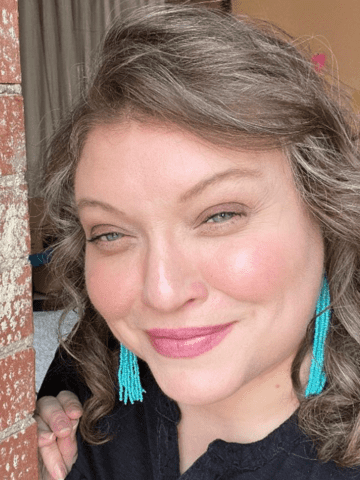
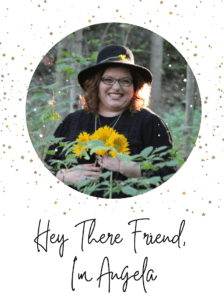
Angela Herrington is a spiritual coach and seminary-trained online pastor who has spent more than a decade helping people break free from toxic religious culture. She is the host of The Deconstructing Faith Summit, a Lark’s Song Certified Life Coach, a dynamic conference speaker, and the author of Deconstructing Your Faith without Losing Yourself. Her work has been featured in The New Republic, Religion News Service, Hope for Women magazine, and Authority Magazine.
She’s a firstborn, Enneagram 8, Gen Xer who loves to question everything. She holds a BA from Indiana Wesleyan and a Master in Leadership from Wesley Seminary. Her graduate research project focused on leadership development and opportunities for Gen X women in the US church.
Angela and her unique online ministry are featured in Lyz Lenz’s 2019 book God Land: Story of Faith, Loss, and Renewal in Middle America. She has published articles in Hope for Women and HOPE is Now magazines. She has been featured in The New Republic, Publisher’s Today, and Religion News Service.
Her first book, Deconstruct Your Faith Without Losing Yourself (Eerdmans February, 2024), shares her decade of experience as a coach in Christian spaces, personal stories, a hefty dose of compassion, and her trademark Gen X humor.
Her second book, Embracing the Old Witch in the Woods: Liberating Feminine Wisdom from Christian Patriarchy (Broadleaf, October 2025), is a road map for readers ready to challenge limiting beliefs, confront systemic injustices, and reclaim their inherent worth and wisdom. It helps readers reclaim feminine wisdom in order to liberate ourselves, our communities, and our souls, gaining strength and resilience through our connection to ourselves and to each other.
Angela is also a wife, a mom to 5, and a proud resident of Indiana, with her family when they’re not traveling the US in their RV.